

Is Cappadocia Worth Visiting in Winter?
Cappadocia in winter trades warm balloon-ride mornings for something quieter and, in its own way, more striking: snow settling over the fairy chimneys, valleys with hardly another traveler in sight, and cave hotels that feel genuinely cozy rather than just charming. Cappadocia during winter is not for everyone, the cold is real and balloon flights are less predictable, but for travelers who don’t mind bundling up, it is one of the most photogenic and least crowded ways to see the region.
The trade-off is straightforward. Summer and the shoulder seasons offer more reliable balloon flights and longer, warmer days for walking between valleys. Winter offers the opposite: shorter days, colder air, and a real chance of a cancelled flight, in exchange for scenery and a sense of space that simply is not available the rest of the year. Travelers who have already seen Cappadocia in warmer months, or who are drawn specifically to snow photography, tend to get the most out of a winter visit.
Does It Snow in Cappadocia?
Yes, Cappadocia in snow is a real possibility from December through February, with January the most likely month for a proper covering. Snowfall is not guaranteed on any given week, the region sits in a semi-arid climate zone, but when it does snow, it tends to settle for a few days rather than melting immediately, since temperatures stay low enough overnight. Cappadocia in winter season sees the fairy chimneys and rock-cut churches dusted in white often enough that photographers plan trips specifically around the chance of it.
There is no way to guarantee snow on any specific date, weather in the region can shift quickly, but travelers hoping for the classic snow-covered valley photo generally have better odds in January than in December or February. Checking a short-range forecast a week or so out is more useful than trying to plan around it months in advance.
What to Pack for Cappadocia in Winter?
A proper insulated coat matters more than anything else, since wind across the open valleys makes the cold feel sharper than the thermometer suggests. Waterproof, sturdy footwear is essential for icy or muddy paths at sites like Göreme Open Air Museum and Uçhisar Castle. Thermal layers, gloves, and a hat cover the rest of it, along with sunglasses, since snow glare on a clear day can be surprisingly strong. Most cave hotels have good heating, but pack warm sleepwear regardless, older stone buildings can lose heat quickly once the fire or heater is off for the night.
A daypack with room for layers is worth bringing too, since temperatures can swing noticeably between a shaded valley floor and a sunny viewpoint on the same walk. Hand warmers are a small addition that make an early balloon flight or sunrise photography session considerably more bearable.
Best Things to Do in Cappadocia in Winter
Things to do in Cappadocia in winter look a little different from the summer version of the same list, less time outdoors at midday, more emphasis on scenery, warmth, and indoor experiences. Here are ten Cappadocia winter activities worth building a trip around.
1. Watching Snow Settle Over the Fairy Chimneys
Viewpoints like Uçhisar Castle and the terraces above Göreme turn into something else entirely after a snowfall. Early morning is best, before foot traffic disturbs the fresh covering.
2. Taking a Winter Hot Air Balloon Flight
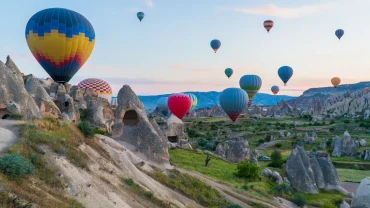
Flights do go up in winter, just less consistently than in spring or autumn. A snow-covered valley seen from above is worth the extra buffer day it might take to catch a clear, calm morning.
3. Exploring Göreme Open Air Museum Without the Crowds
The rock-cut churches and frescoes are the same as any other season, but winter is the one time you can walk through the site without dodging tour groups at every doorway.
4. Warming Up in a Cave Hotel by the Fireplace
Many boutique cave hotels in Uçhisar and Ürgüp lean into the season with fireplaces, thick blankets, and hot drinks by the fire, turning the hotel itself into part of the winter experience rather than just a place to sleep.
5. Descending Into an Underground City
Kaymaklı and Derinkuyu stay a fairly constant temperature year-round, which makes them one of the better cold-weather stops, warmer underground than the open valleys above.
6. Joining a Turkish Night of Music and Dance
An evening of live folk music, regional dance, and a full dinner spread is a good way to fill a long winter night, and several venues in Ürgüp and Avanos run these through the colder months.
7. Taking a Hands-On Cooking Class
A cooking session with a local family, learning dishes like testi kebabı or mantı over a warm kitchen stove, suits winter travel especially well when the alternative is standing outdoors in the cold.
8. Wine Tasting in an Ürgüp Cellar
Cappadocia’s volcanic soil has supported winemaking for centuries, and a tasting in one of Ürgüp’s cellar bars is a naturally indoor, naturally warm way to spend a winter afternoon.
9. Photographing Red Valley and Rose Valley in the Snow
The rust-colored rock against fresh snow is a striking combination, and with far fewer hikers on the trail, it is easier to find a clear shot without waiting your turn.
10. Relaxing in a Traditional Turkish Hammam
After a cold day outdoors, a hammam session is one of the more satisfying ways to warm back up, and several hotels and standalone bathhouses in the region offer the full scrub-and-massage experience.
The Weather in Cappadocia in Winter Season
Winter in Cappadocia runs cold and generally dry, with occasional snow rather than constant snowfall, and daylight hours noticeably shorter than the rest of the year.
Cappadocia in December
Daytime highs sit around 5 to 8°C, with nights well below freezing. Snow is possible but not the norm this early in the season, and museums and underground cities stay open on their winter hours. This is also when the region starts quieting down after the last of the autumn visitors.
Cappadocia in January
The coldest month of the year, with daytime highs often hovering close to freezing and nights well into negative territory. This is the most likely month to see snow settle and stay on the fairy chimneys, though balloon flights are cancelled more often due to wind and fog. Hotel rates and crowds are both at their lowest point of the year.
Cappadocia in February
Still firmly winter, but days start lengthening and the harshest cold usually eases slightly in the back half of the month. Snow is still a real possibility, and this remains one of the quietest, least expensive months to visit.
Advantages of Visiting Cappadocia in Winter
The biggest draw is simply space: sites like Göreme Open Air Museum, Uçhisar Castle, and the underground cities that feel packed with tour groups in summer are genuinely peaceful in winter. Hotel rates drop to their lowest point of the year, including at cave hotels that would otherwise be booked out months in advance during balloon season. And for photographers specifically, snow on the fairy chimneys is a scene that simply does not exist the rest of the year, making winter the only season that offers it at all.
Winter also suits travelers who prefer a slower pace generally. Without the pressure of a packed itinerary competing with tour buses, it is easier to linger over a single valley, spend a full afternoon at a cooking class, or simply sit by a fireplace instead of rushing between sites before the next group arrives.
FAQs About Cappadocia in Winter
Yes, for travelers who don’t mind cold weather and want fewer crowds. It is a different trip than a spring or summer visit, quieter and more atmospheric, rather than better or worse outright.
Daytime highs typically run from just above freezing to around 8°C, with nighttime lows regularly dropping below freezing, especially in January.
Yes, though most sites, including Göreme Open Air Museum and the underground cities, switch to shorter winter hours, generally closing earlier than in summer.
No, this is by far the quietest season, with a fraction of the visitors seen between April and October.
It is a strong choice for travelers drawn to the idea of snow-covered fairy chimneys and empty valleys, though those whose main goal is a guaranteed hot air balloon flight may prefer to plan around spring or autumn instead.
Whatever the weather, our Cappadocia daily tours run year-round, with pacing adjusted for the season, more time indoors at underground cities and cave workshops when it’s cold, more time on the trails when it’s not. And if you’re planning a longer winter trip through Türkiye, our 8-Day Istanbul & Cappadocia private tour can be adjusted around the shorter winter days.
Comment (0)